A live-cinema format — film, live re-score, and a room that's allowed to move.

In development
Role: Founder
What I do: Artistic direction · Partnerships with venues and festivals · Funding · Building the organisational structure. Technical management. Rights negotiation
Team: A core of around five people, Belgium, France, Greece, Poland, and Finland.
Status: PoC. Being tested at festival scale this autumn.
The problem
Cinema attendance is falling, and the experience itself is passive: sit still, stay quiet, face forward. Streaming does passive better and cheaper.
Venues know they need to programme events rather than screenings. Most do it by adding something around the edges; a Q&A, a themed drink, a sing-along. The film stays exactly as it was.
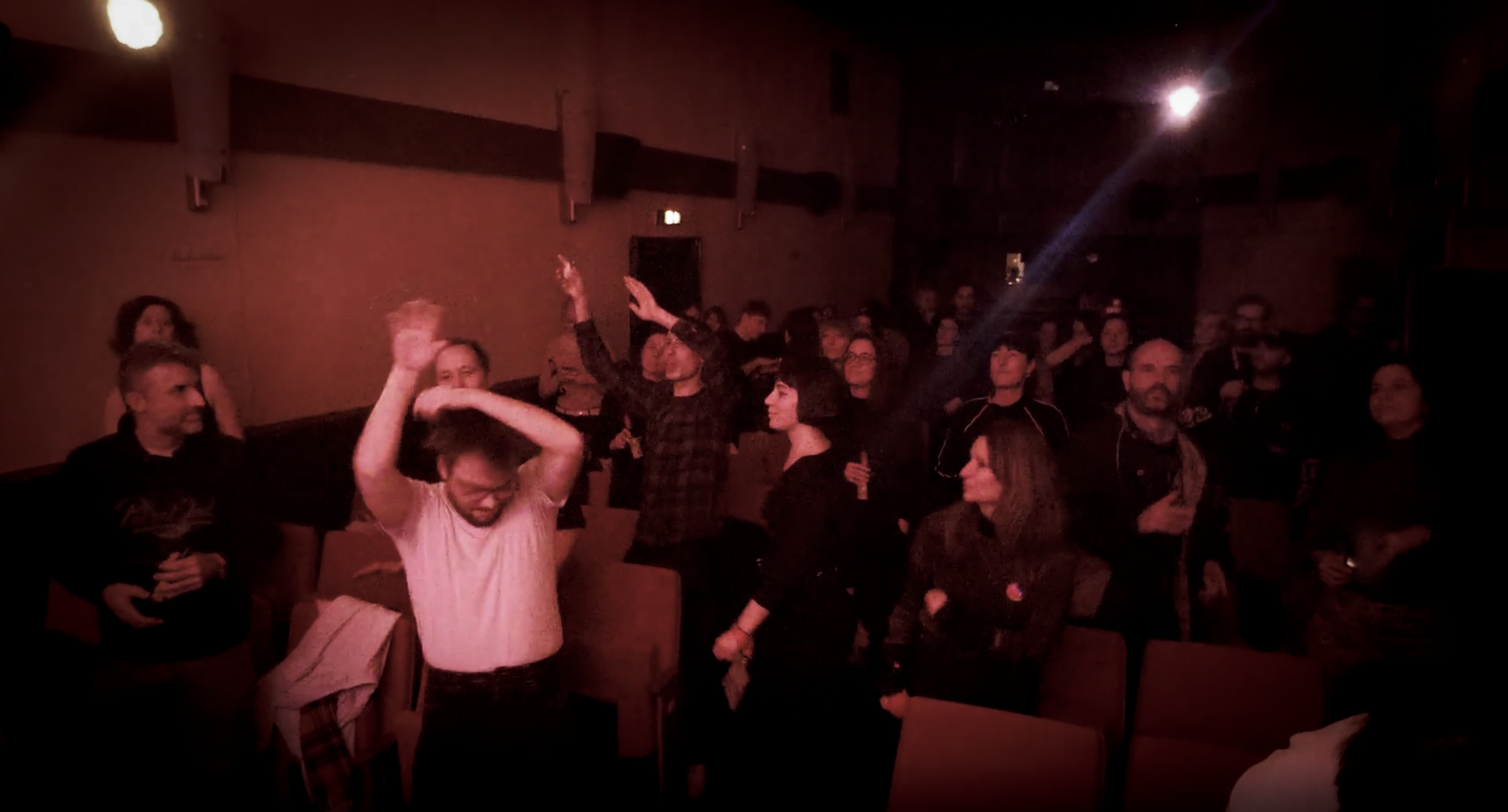
RaveScreen changes the experience itself rather than decorating it. The film stays at the centre; what changes is the audience’s relationship to it.
What it is
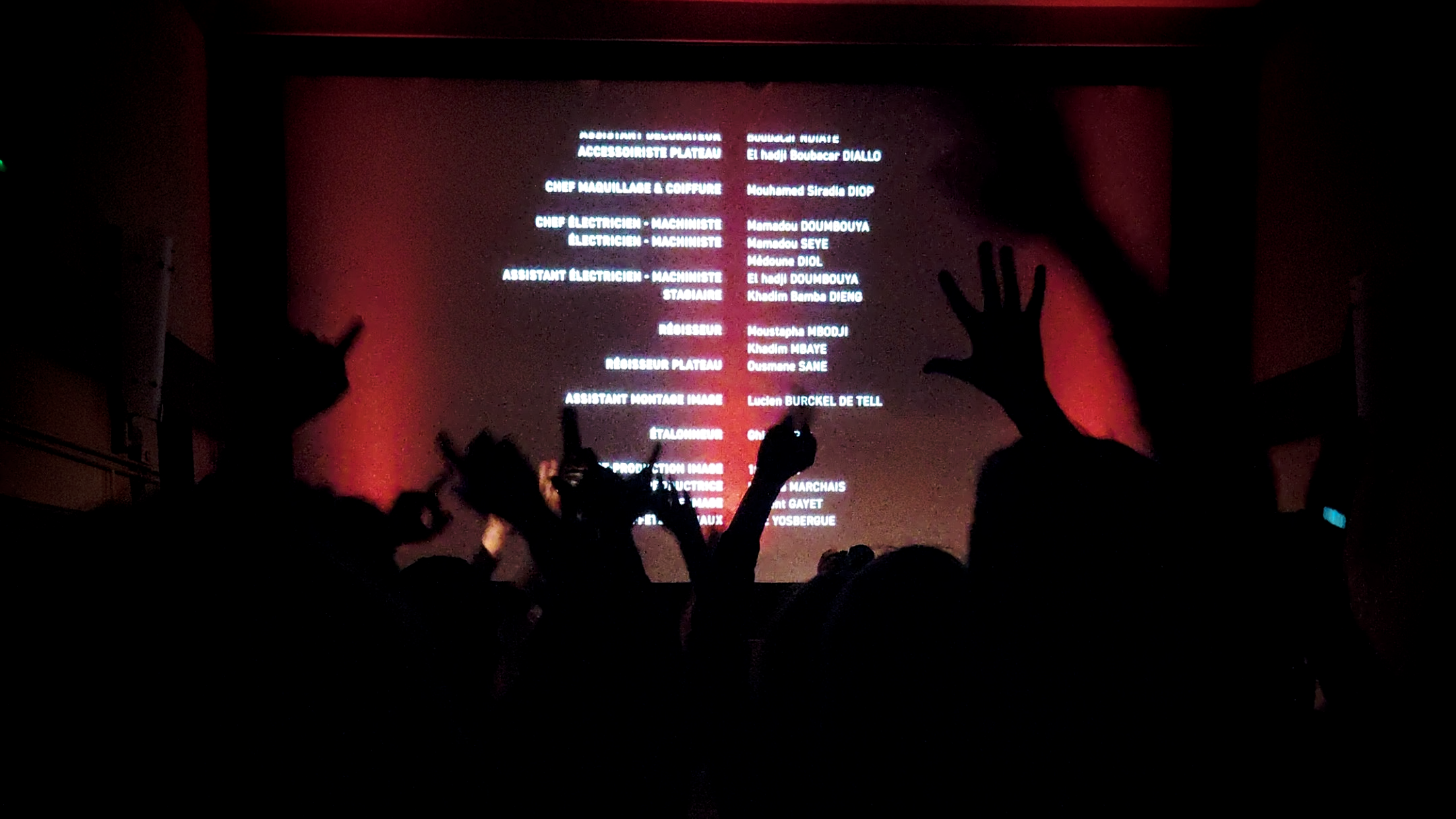
A curated film, screened with its original soundtrack replaced by a live DJ re-score with live VJ visuals, and a host who introduces the evening and guides the room.
People can stand, move, and dance, or stay in their seats. Participation is invited, not required.
It’s deliberately not a club night. It’s built for intergenerational audiences, and for people who don’t usually go to screenings.
What a venue gets
- A film from a pre-cleared catalogue, with live re-scoring rights already negotiated
- The artistic team: DJ, VJ, and mediator
- The dramaturgy of the evening; how the film is introduced and how the room is invited in
- Technical specification and setup guidance: sound levels, DJ and VJ positioning, seating and standing zones
The venue brings the room, the projection, the sound and the audience.
The part that’s hard to copy
Anyone can put a DJ in front of a screen once.
Doing it repeatably and legally means clearing live re-scoring rights film by film, in advance. That’s slow, expensive, and built on relationships with rightsholders. It’s also the reason venues can’t simply do this themselves, not because they lack the idea, but because they don’t have the experience of running a participatory room without it collapsing into either a silent screening or a club night that ignores the film.
The catalogue is the asset. Negotiating it is most of my job.
Where it is
- Futura Cinema incubation programme, Current.
- Breitenseer Lichtspiele, Vienna, January 2026: first run.
- Hamburg Film Festival, Elbphilharmonie, Hamburg, September 2026.
- Les Traversées du Marais Festival, Galerie 24b, Paris, September 2026.
- Cinema Trottoir, Cinemaximiliaan, Brussels, September 2026.
Conversations ongoing with cinemas and festivals in Belgium, France, Austria, the Netherlands, Poland and Norway.
What I’m still working out
- Whether light mediation is enough to get a room participating, or whether it needs more structure.
- How far the licensing model holds when the first licensee is a real organisation with its own ideas.
- The branding. It promises a club, and the format deliberately isn’t one.
I lead digital products that combine technology, human behavior, and experience innovation.