I proposed VR as a permanent part of Bozar's programme and built a growing format.
Role: Product owner, Bozar (Centre for Fine Arts, Brussels)
Owned: Concept · Experience design · Curation · Technical management · Audience research and analysis · Mediation during sessions · Communications and writing · Delivery management · Iteration
Team: Bozar cinema & communications teams · Lucas Dewulf (external co-curator, founder of XRT)
Timeline: Research summer 2024 · Test phase December 2024 · Public launch January 2025 · Still running
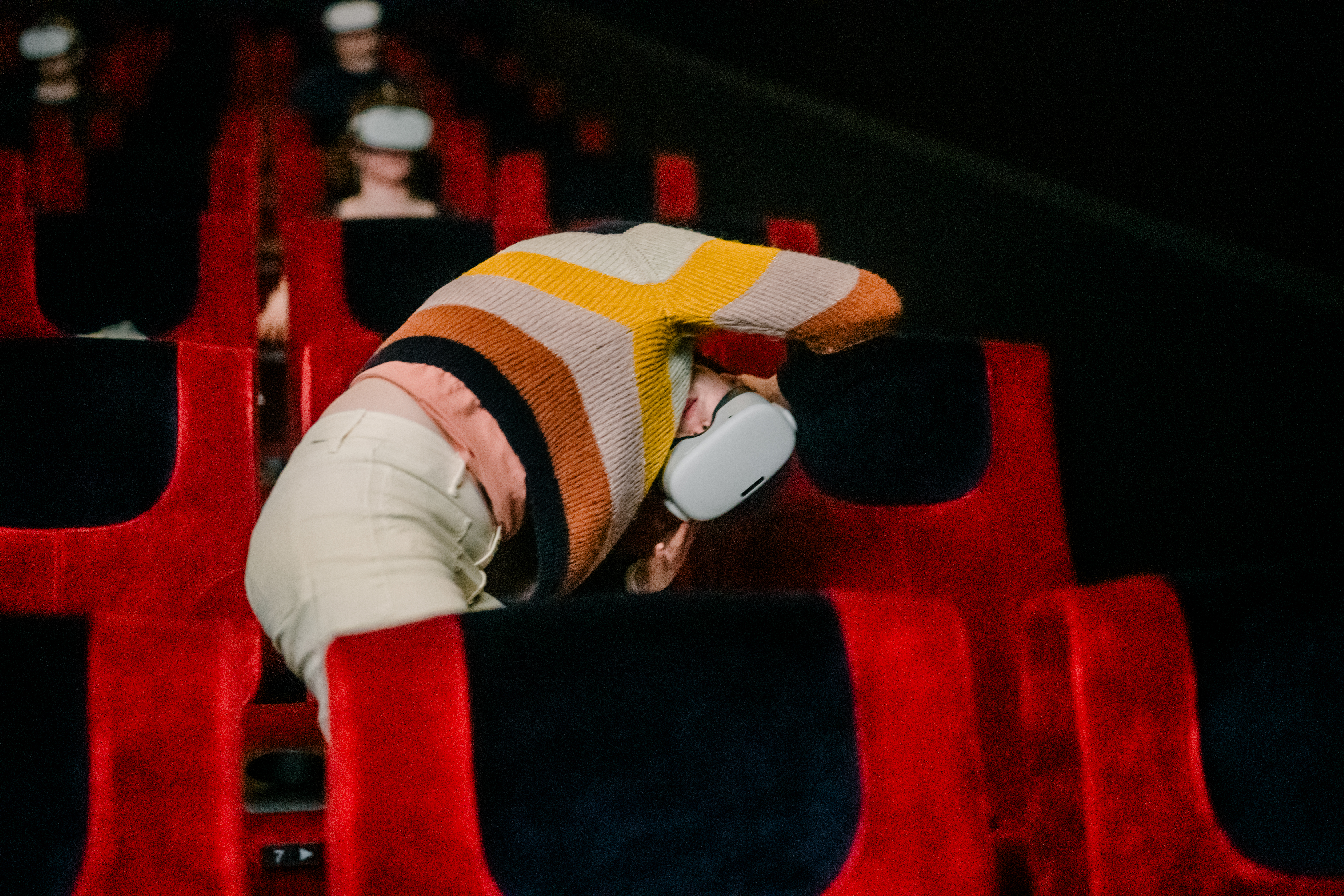
Context
Cultrual and artistic institutions can’t afford expensive developing technologies most of the time, they mainly rely on fundings and VR, just as one-off prestige projects.
That framing came from the funding situation. The VR pieces Bozar had shown were paid for by an EU funding. When the money stopped, the VR would stop with it unless there was something cheaper and repeatable underneath.
Before the summer of 2024 I went to the Netherlands to see Nu:Reality, which had given VR a permanent place in its programming as a cinema experience. That trip led to a conversation with Lucas Dewulf, who ran some experiments at KASK cinema in Gent. We started the VR film screening project together.
Constraints
| VR is isolating | One person, one headset, one experience. It doesn’t work as a shared cultural event, which is what a cinema does. |
| Cost per viewer | VR doesn’t scale the way film screenings do. The more people you want to reach, the more it costs you, almost linearly. |
| Funding was ending | Whatever we built had to survive the end of the funding that built it. |
| The headset is intimidating | For a lot of people, putting on a VR headset is uncomfortable. That’s an adoption problem before it’s a technical one. |
| Space | The format had to fit into existing rooms, and an existing team. |
Decision 1: Make it collective instead of individual
My first idea was a VR corner: headsets in a space, people drop in and try something in VR (360 or interactive).
I moved away from it. VR on your own is isolating, and a corner doesn’t scale; you’re limited by how many headsets you have and how long each person keeps one. It also doesn’t give people a reason to come at a particular time.
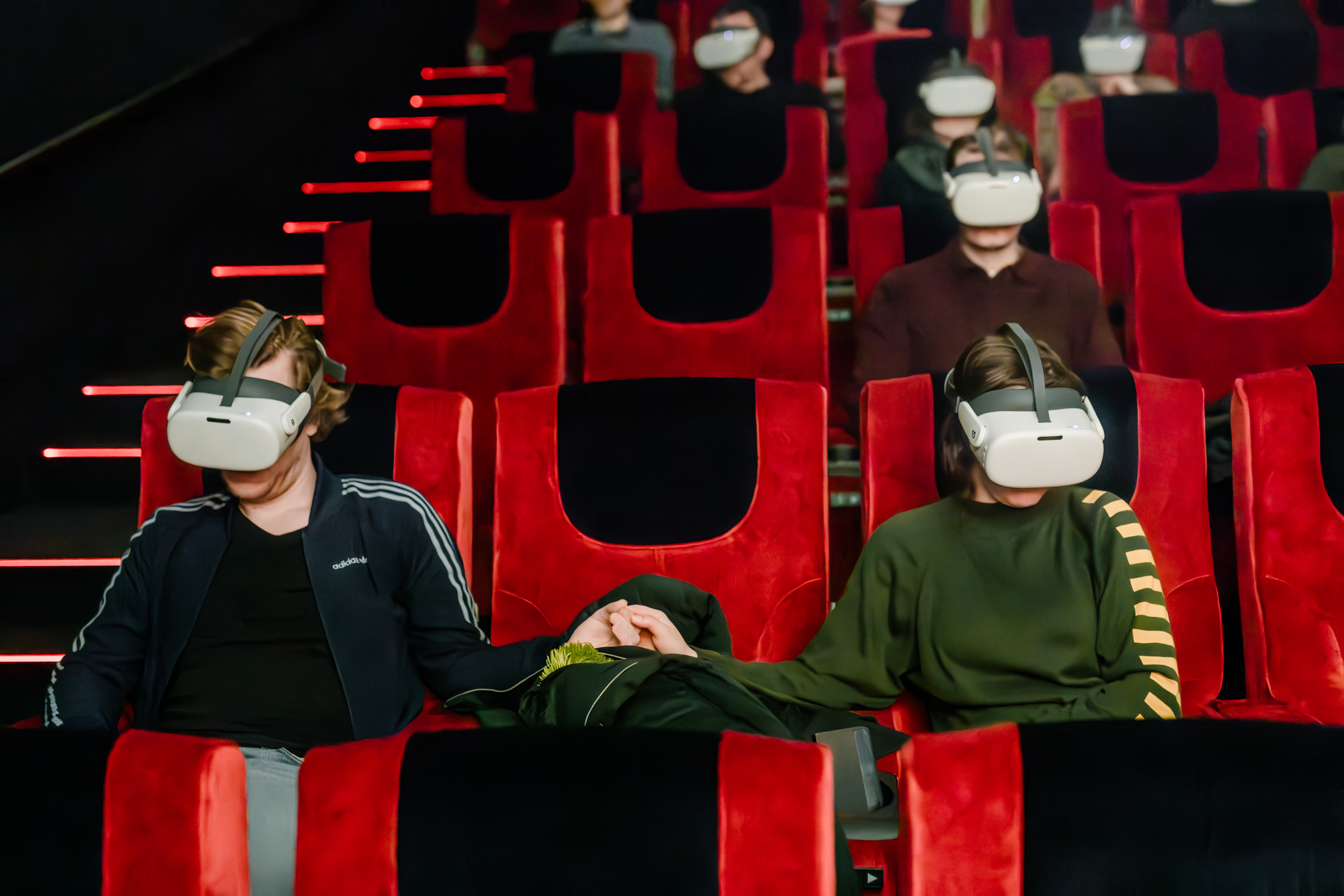
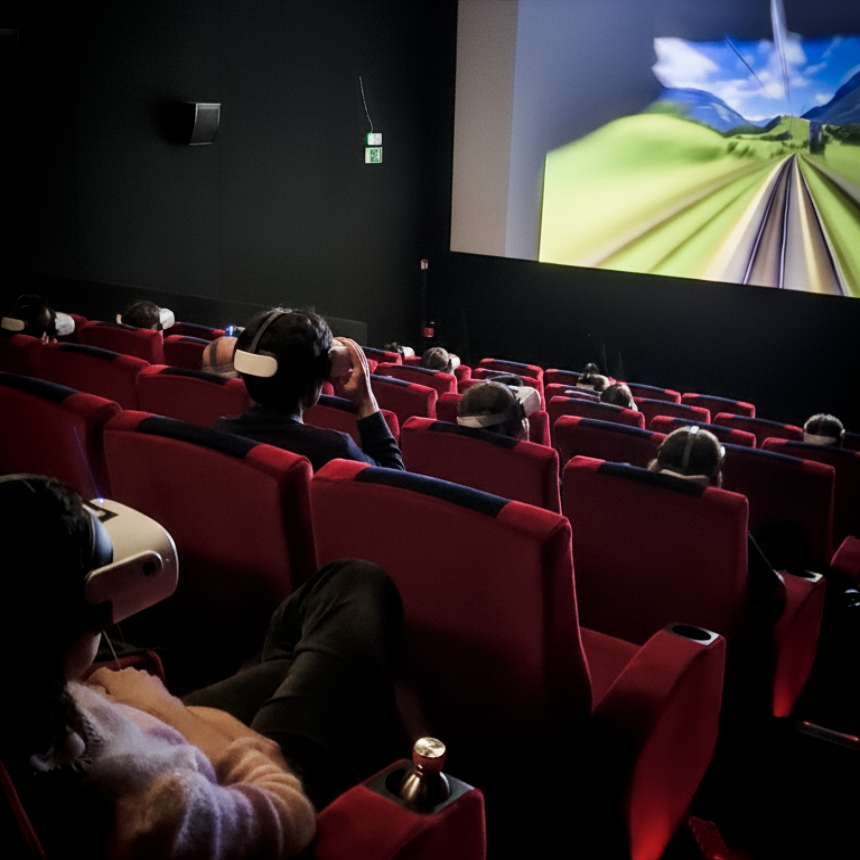
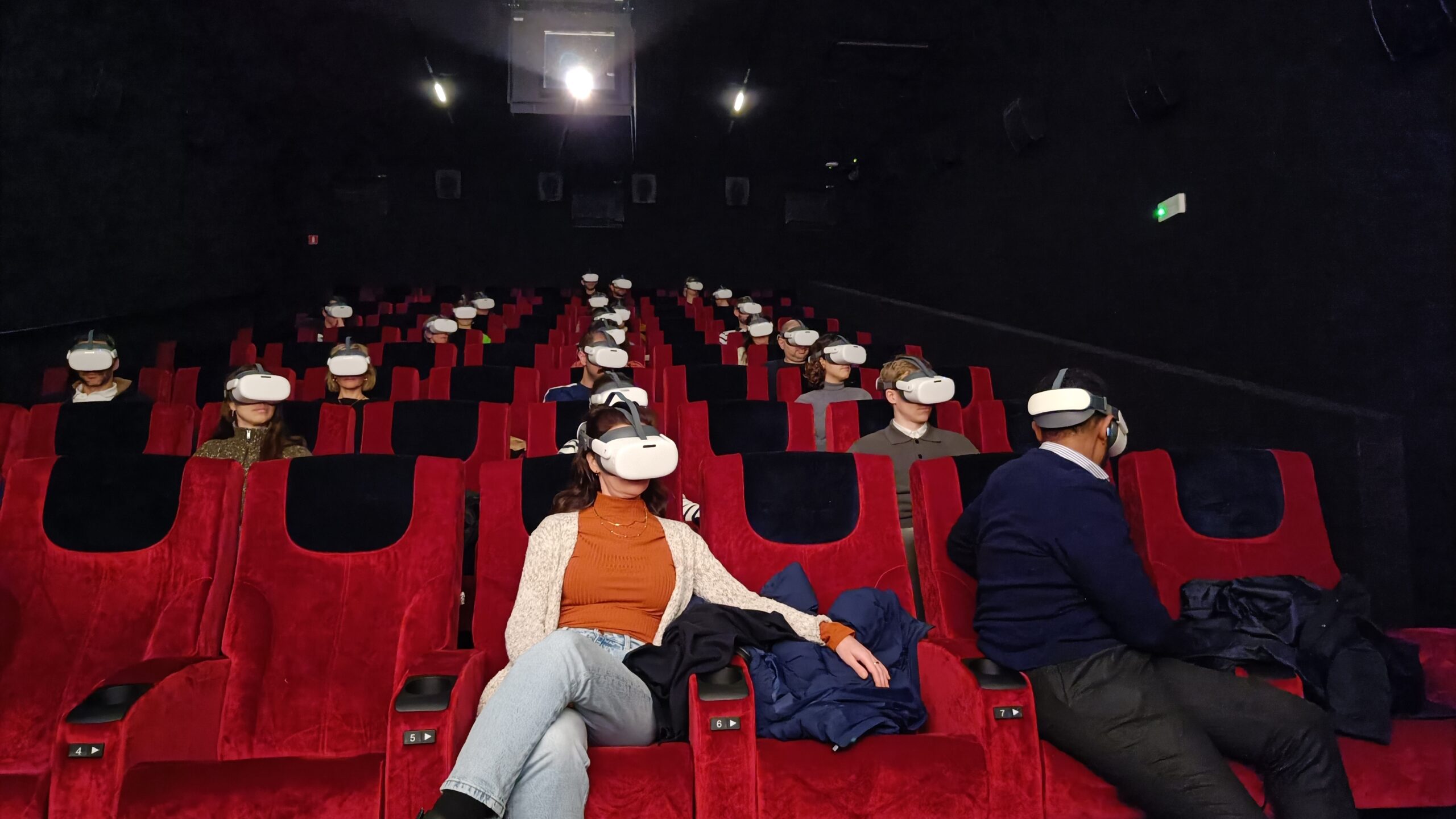
So we built it as a cinema format instead. Everyone arrives at the same time, watches the same films, and talks about it afterwards. Thirty people in one room, one session, 30 to 45 minutes, €10 a ticket. The audience can watch on a headset or on the cinema screen.
Decision 2: Design the session around comfort, not the technology
Every session starts with guidance on how to put the headset on and adjust it. We tell people explicitly that it’s fine to take it off at any point if they’re uncomfortable. There’s a planned break after the each film. And after the screening, we ask people to talk about their experience.
None of that is technically interesting. It’s the reason people who have never used VR come, stay, and come back.
I hosted and mediated the sessions myself, which is also how I saw what was and wasn’t working.
Decision 3: Curate for coherence, not prestige
The obvious approach is to show the latest award winners from Venice or Cannes.
We didn’t. We chose films that work together; a coherent programme across a theme, mixing live action, animation and CGI, rather than a set of individually impressive pieces that don’t sit together. Each month’s theme lines up with Bozar’s seasonal topics.
I built a scoring system for curating: immersion, visual quality, narrative, artistic value, sound design, accessibility, theme alignment, concept depth, engagement, diversity, innovation.
Decision 4: Buy the equipment
That was deliberate. Buying reliable headsets outright meant Bozar owned the capability rather than renting it per project. The Picos run the 360° screenings; the Quests are there for VR installations that need more.
The screenings run on ShowtimeVR, which syncs all the headsets so everyone sees the same thing at the same time.
Decision 5: Propose a format architecture, not one event
I wrote a proposal setting out how immersive work should sit at Bozar as a whole, in three categories:
Performative XR: mixed reality with live performance, multi-user, large room, high-end kit.
VR Film Screening: headsets in a cinema setting. Monthly. Affordable hardware.
Standalone XR: individual headset experiences, closer to an exhibition.
Each one has a different frequency, cost and owner, so the institution isn’t betting everything on one expensive format.
I also proposed a fourth; fully virtual screenings on platforms like VRChat. It depended on partnerships we didn’t have and had almost no chance of making money. It was the idea to drop.
Outcomes
Reach: ~4,000 visitors across 2 seasons.
| Year | Visitors | Number of VR events |
|---|---|---|
| 2024 | ~200 | 1 |
| 2025 | ~1700 | 9 |
| 2026 | ~2100 | 12 |
The formats are still running, which was the point of building it the way we did.
On the money: ticket sales roughly cover the direct costs including film fees, the ShowtimeVR subscription, hosting, and curation. It doesn’t generate a surplus. That’s true of almost all artistic VR, and our version is cheaper and easier to run than most, but it’s a format that needs partnership or sponsorship to grow rather than ticket income alone.
I designed a sponsorship model for this: a custom 360° film shown at the start of each session as the audience’s first immersive experience. Not an advert: a piece made around the sponsor’s story as an intro for the experience.
Retrospective
The mediation is the product. I spent most of my design time on how people are welcomed, warned, paced and debriefed. That’s what made VR approachable for people who’d never tried it, and it’s the part I’d carry into any new-technology format.
Building for after the funding. Buying reliable, affordable hardware and using software that lets one person run a session for thirty people is why this survived.
Cutting the fourth category was as useful as proposing the other three. It would have cost a lot, depended on partners we didn’t have, and produced very little.
I lead digital products that combine technology, human behavior, and experience innovation.