Launching a new format inside a 100-year-old arts institution; from a two-week pilot to a recurring programme that has grown 3x.
Role: Product lead & co-curator, Bozar (Centre for Fine Arts, Brussels)
Owned: Concept & internal positioning · Space and experience design · Co-curation · Curation framework · Technical management · Audience research & analysis · Partnerships · Delivery management · Usability testing · Iteration
Team: Bozar exhibitions, cinema & communications teams · external curators · designers · partners (VAF)
Timeline: Concept 2023 · First edition February 2024 · Ongoing
Live: Covered by De Standaard, BRUZZ, and RTBF, among others.
Context
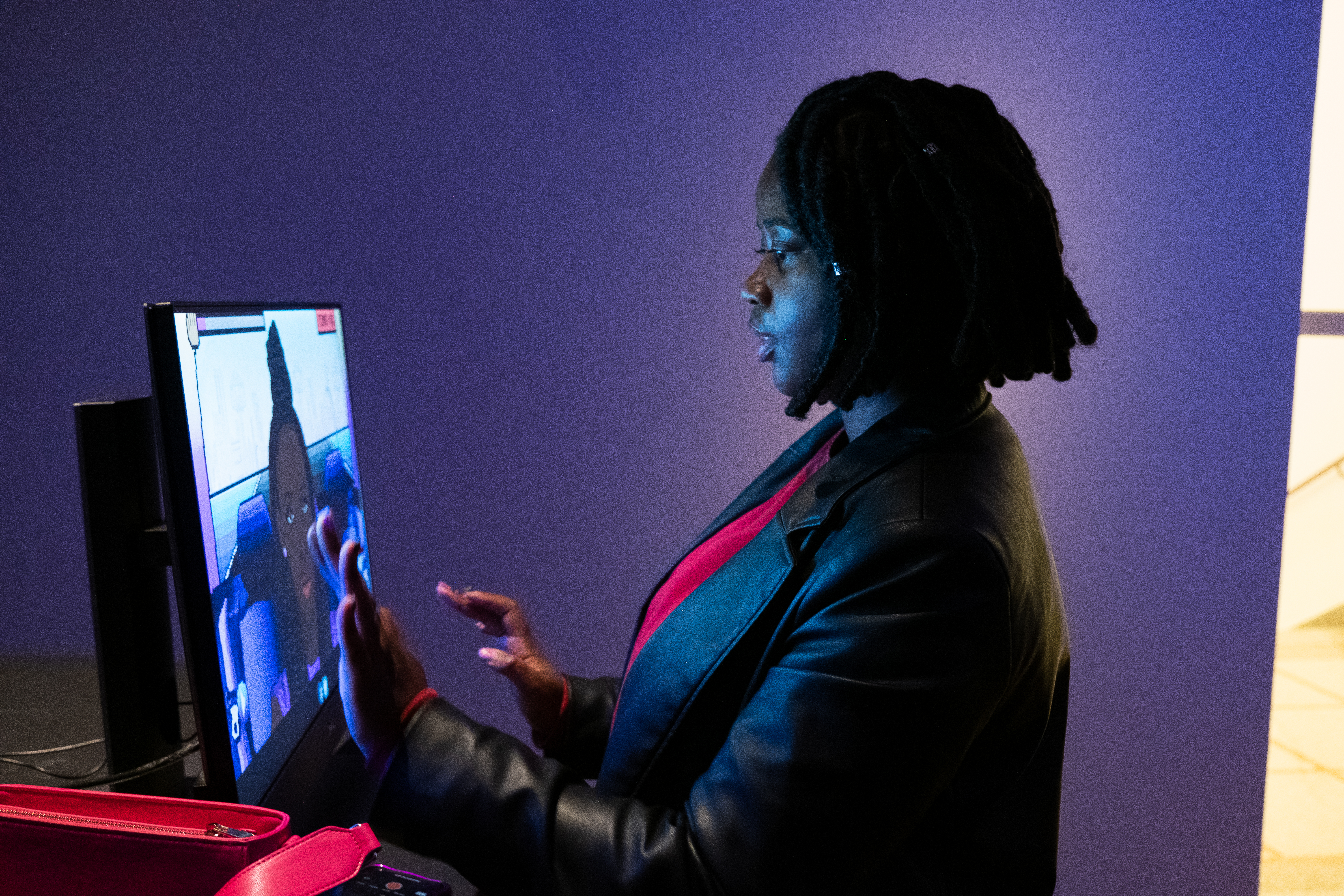
The idea: bring artistic video games into Bozar as a legitimate exhibition format, not as sole entertainment or a children’s activity, but as contemporary art with its own critical language.
The strategic case was the audience. Bozar, like most major arts institutions, reaches an audience that already visits arts institutions. Video games are the dominant cultural medium for people under 40 and almost absent from fine-art programming. The gap was obvious; the obstacle wasn’t the audience, it was the institution.
Constraints
| Institutional legitimacy | Video games have an image problem in a fine-arts house: violence, competition, commerce. |
| No dedicated infrastructure | No existing scenography, hardware, maintenance capability, or operational model for a playable exhibition. |
| Cross-team dependency | Nothing could ship without technical, exhibitions, and communications aligned. |
| Institutional capacity | The pilot stretched Bozar’s hosting, maintenance, and communications. |
| Physical visibility | The space is located inside a very large building, with no natural line of sight. |
Decision 1: Writing a manifesto before designing anything
For an institution whose reputation rests on curatorial seriousness, “we’re putting video games in the building” is a brand risk before it’s a programme. Good execution can’t fully solve that; it has to be solved in advance, in writing.
So before designing anything, I wrote a manifesto: a positioning document defining exactly where Bozar stood on the spectrum of video games, for both internal and external use. It committed to games as artistic expression rather than competition; to experience and narrative over winning and losing; to work engaging contemporary, historical, and socio-political themes; to accessibility for players of all skill levels; to independent artists and developers; to inclusivity and diversity, and it explicitly excluded games centred on extreme violence, harm, or discrimination.
Why it helped: it gave curators, communications, and management something to point at when they had to defend the idea. It also gave the press a way to describe what they were looking at. Most organisations that want to adopt an unfamiliar format fail at exactly this point: they can execute it, but they can’t legitimise it internally.
Decision 2: Turn curation into a framework
By the second edition, we were three curators, including an external specialist in indie and artistic games. Three people with different tastes selecting can bring a consistency problem, and consistency is what makes a format a format.
I built an evaluation framework scoring every candidate game across twelve dimensions:
| Playthrough time | Visuals | Narration |
| Playability | Artistic value | Music |
| Accessibility | Theme relevance | Concept depth |
| Enjoyability | Diversity | Uniqueness |
Why: it converted selection from taste into a process, kept the programme aligned with the manifesto, made disagreements productive, and meant curatorial decisions could be explained to stakeholders.
Decision 3: Build it so it runs without me
The pilot ran for 16 days and could be babysat. Edition two ran 61 days and had to survive without me in the room.
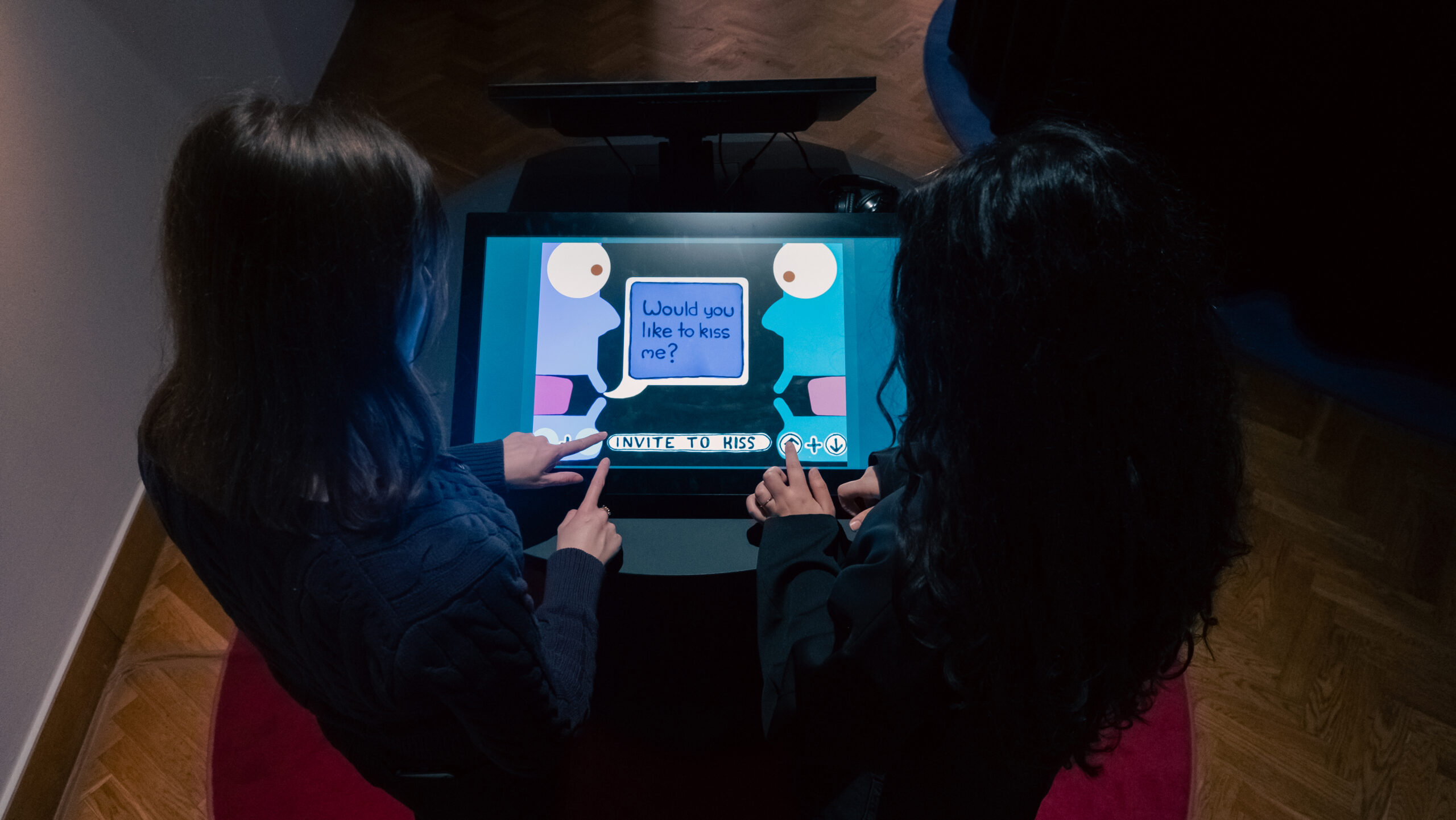
Kiosk software made the visitor experience smoother and cut the cost of keeping the exhibition alive
We also reused the scenography from the first edition and only bought what the new games needed. That’s why the next editions cost far less than the first.
Infrastructure is what turns an event into a format. Kiosk software, reusable scenography, and a written curation framework made later editions cost less, ran longer, and the project could be handed to other people without collapsing.
Outcomes
Reach: ~60,000 visitors across five editions.
| Edition | Visitors | Duration | Avg/day |
|---|---|---|---|
| Afropolitan | ~3,000 | 16 days | 187.5 |
| Love & Emotions | 5,981 | 61 days | 98.0 |
| Gabriel Massan | 3,186 | 38 days | 83.8 |
| Urban Playgrounds | 9,057 | 47 days | 192.7 |
| Picture Perfect | 40,000+ | 137 days, ongoing | ~291 |
I tracked visitors per day rather than totals, because the runs vary from 16 days to five months. Reading it that way is what showed us where the format was actually working.
Audience composition:
- Gender: ~51% men, 41% women, 7%+ non-binary
- Intergenerational: 25% aged 25–34, but over 22% aged 45+. 37% under 18.
- Non-gamers: visitors came out of curiosity about the concept or for a social activity with friends and family, not only for gaming.

The replicable model
What five editions of data produced, the blueprint I’d hand to any institution willing to integrate videogame culture into their program:
- Frame it as a cultural experience first, a gaming experience second. This is what lets a non-gaming audience give themselves permission to attend.
- Remove entry friction. No gaming skills required, and short (10–15 minute) sessions widen the audience.
- Include a recognised anchor. One familiar title does more for attendance than a full selection of unfamiliar games.
- Price low, or pay-what-you-can, or free for target segments.

Retrospective
The most important thing I learned is that curatorial quality was not the main driver of reach. Access, visibility, and framing mattered more. That’s uncomfortable for a curator and essential for a product person.
I always argued the Arcade should be a place of shared presence: comfortable, accessible across ages and abilities, somewhere to gather and stay. In practice, we approached it from an exhibition perspective but it needed an audience-engagement perspective.
The manifesto, the scoring framework, the kiosk system, and the reusable scenography are the things that actually got built; and they’re why the format outlasted.
I lead digital products that combine technology, human behavior, and experience innovation.