Misrule (2022)
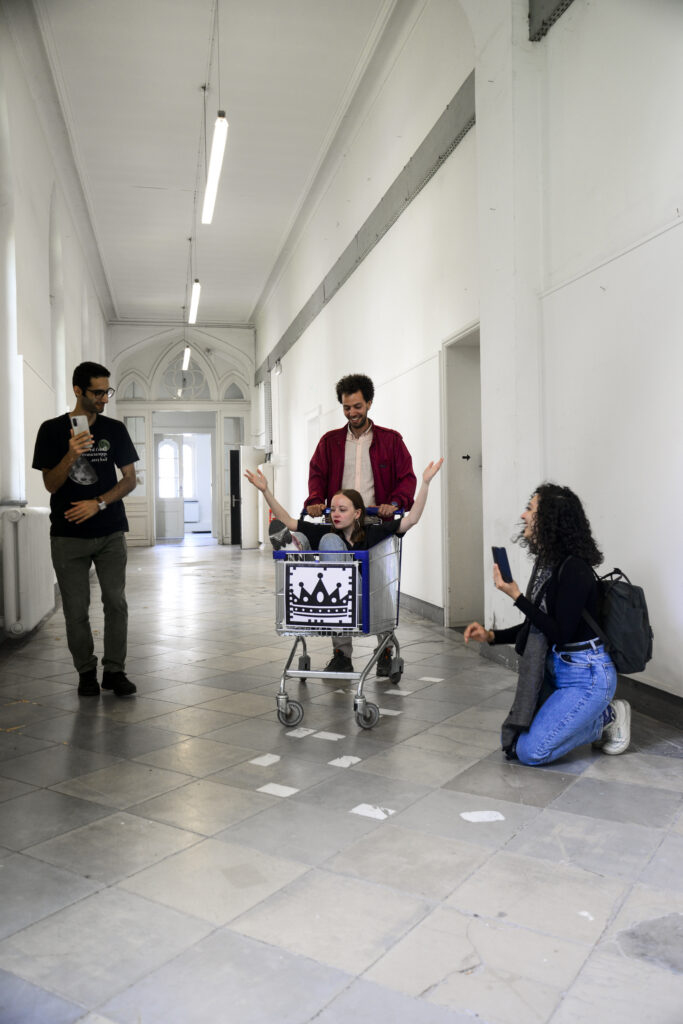
A street becomes a kingdom for thirty minutes, and everyone forgets it’s pretend.
The idea comes from home. Growing up in Bojnord, I knew Khan Khan, a local version of a Persian Nowruz tradition where someone ordinary gets crowned king for a few days, with real power to judge and punish, before being quietly overthrown. I later traced it in a book on Iranian theatre, which named Bojnord as the last place the ritual survived. The poet Ahmad Shamlou had written about it decades earlier, calling it a rare piece of public theatre where people got to critique power by pretending to hold it.
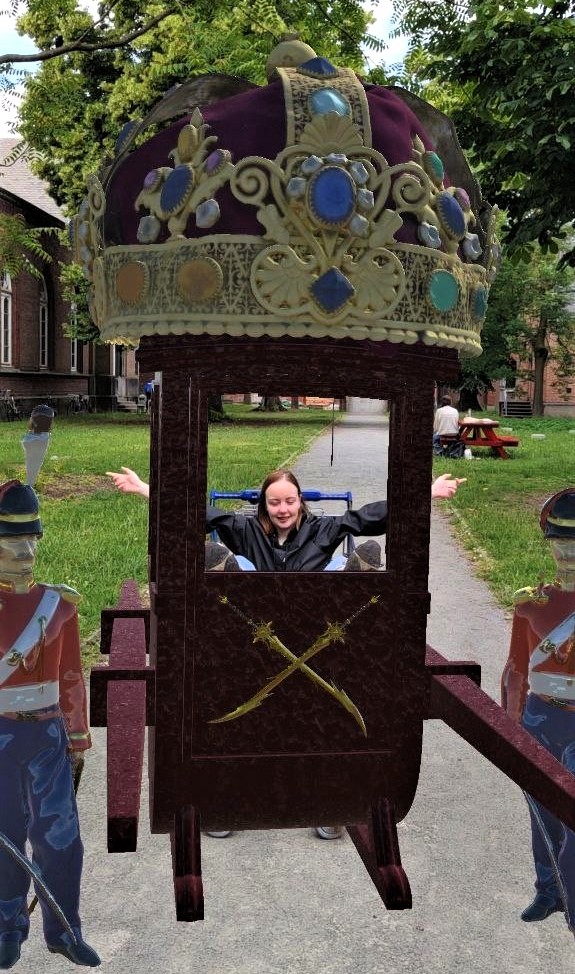
The research question became: what makes a fiction like this believable enough to act on? That’s where Andersen’s Emperor’s New Clothes came in, with a whole crowd agreeing to see clothes that aren’t there. AR was the tool that let me build that exact mechanism into the street: it makes the invisible kingdom visible, but only through the phone, so belief becomes a deliberate act every participant has to choose to perform. Without that layer, there’s no kingdom to obey.
I mapped the route, wrote the minister roles and their real tasks, and built the AR layer and app flow that handed those roles to strangers on the spot. The crown was never real. The obedience was.
1984 is Now (2021)
Two cities happen to the same body at once.
This was the last piece I made while still living in Iran, during COVID, when everything already felt harder than usual. I wanted to give people a stage with no filter, real lives, told by the people living them, without me shaping the story into something safer.
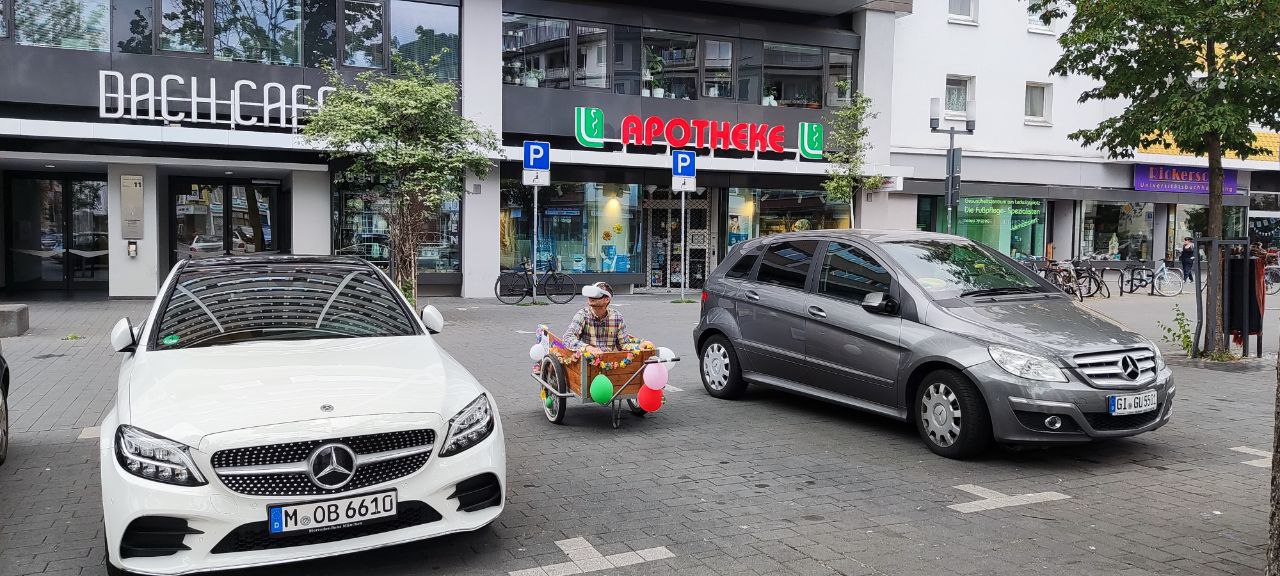
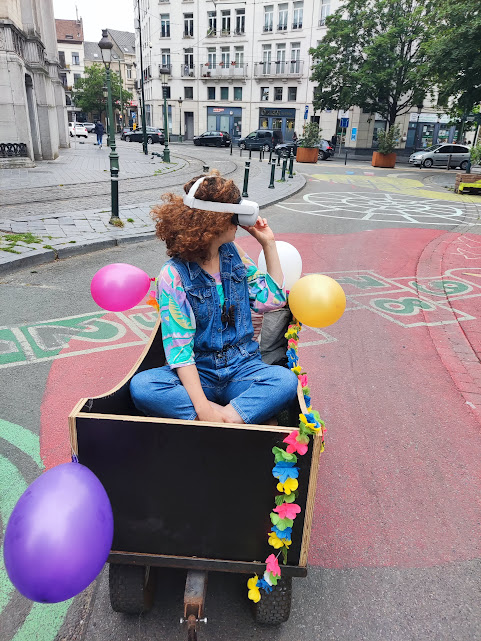
The cart is a Raree Show, moved to the street. A performer pulls it through the city (Brussels or elsewhere), and a rider climbs in wearing a VR headset. As the cart moves through this city, the video moves through Tehran, tracing a route through streets the rider will never physically stand on. Five real narratives, location by location. One is a girl narrating her own abortion, illegal under Iranian law, from the exact street where it happened to her.
VR was the way to do this. A headset puts Tehran around you completely, so the distance collapses. You’re not watching someone else’s life; you’re standing inside it while your body sits somewhere else entirely, moving through a different city, in a language of streets no one told you to notice.
Two cities. One body carrying both.
Father, Cancer, Tehran (2019)
A father’s death and a life in Tehran, told from the back seat of a taxi.
This one is about my relationship with my father, carrying a second relationship inside: mine with Tehran, what it was like to live there.
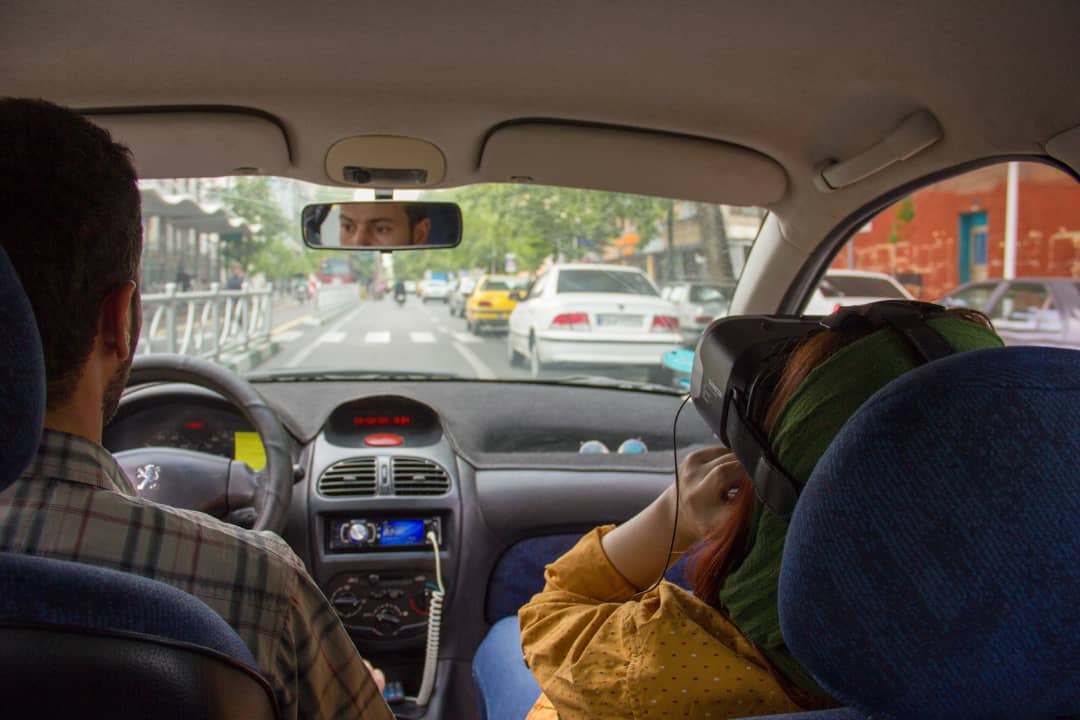
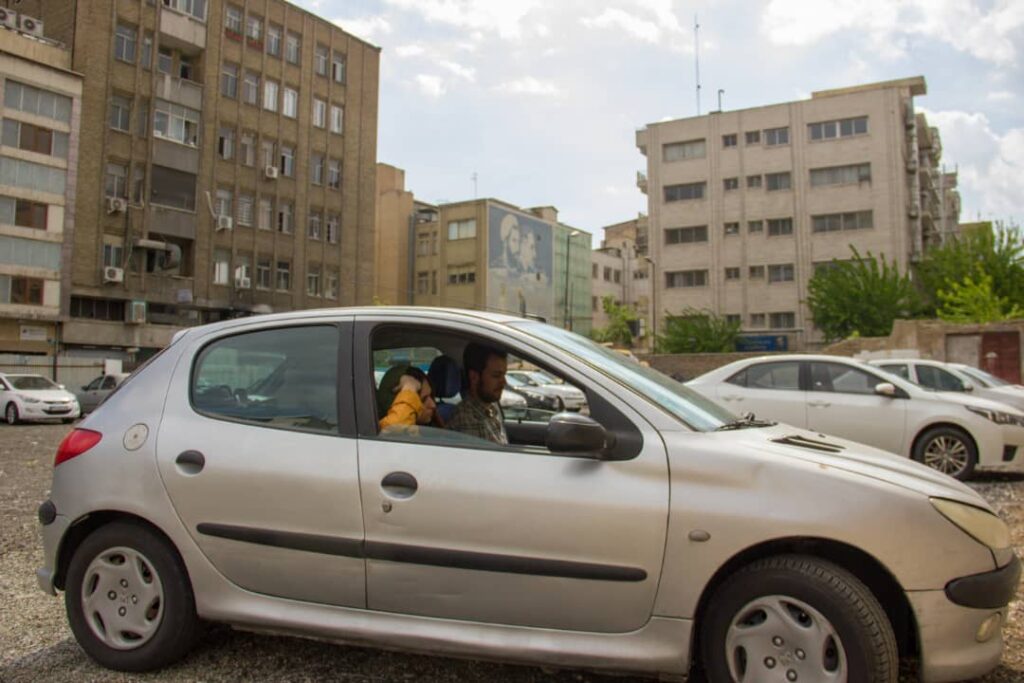
I’d had this dream for years: a performance that happens inside a taxi. In Tehran, an unexpected encounter in a taxi is already its own small performance; strangers, a shared route, no way out until it ends. Theatre has to go looking for its audience in the street rather than wait in a building for them to arrive, so I became the driver. Four people a day put on a headset and rode a route built to match the story.
What they saw was what I wrote, shot, and edited, including family archive footage with clips every Iranian recognizes.
Finger to Finger (2018)
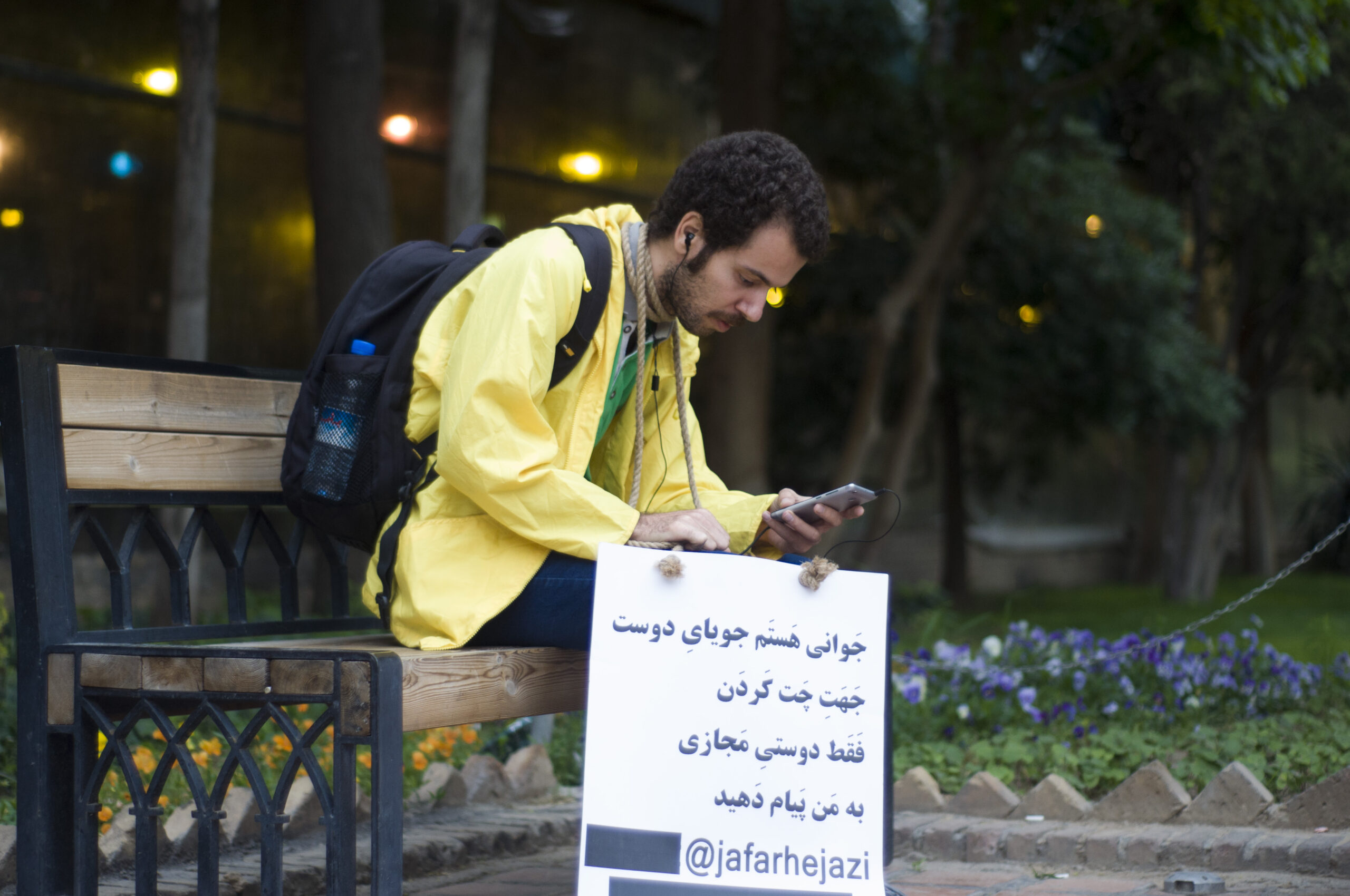
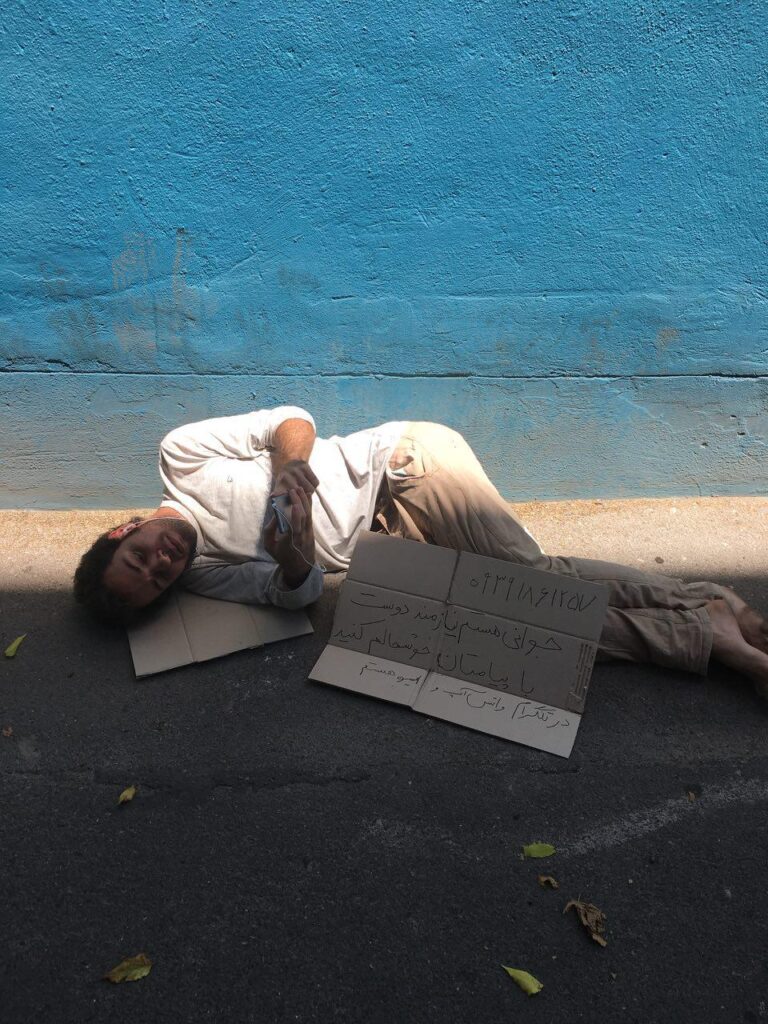
I stood in public for ten days holding a sign that told people not to talk to me.
The placard said it plainly: I need people to chat with, do not talk to me, just texting with online friends. I’m available on WhatsApp. For ten days, 24/7, in parks and pavements, I stood there in person while my actual attention lived entirely in a phone, texting with people who weren’t physically near.
The split was the point. My body stayed in one place, visible to anyone walking. My real presence was happening somewhere else, in someone else’s hand, in a different city or the next street over. As the days went on, the people I was texting felt closer and more comfortable, while I felt lonelier.
That’s the question underneath it: does a screen bring you closer to someone? Is the internet an extension of our body/presence? The internet isn’t a replacement for live presence but another stage for it where gesture and voice still travel through a different kind of wire.
Invisible or As You Like It or The Data Station or What? (2017)
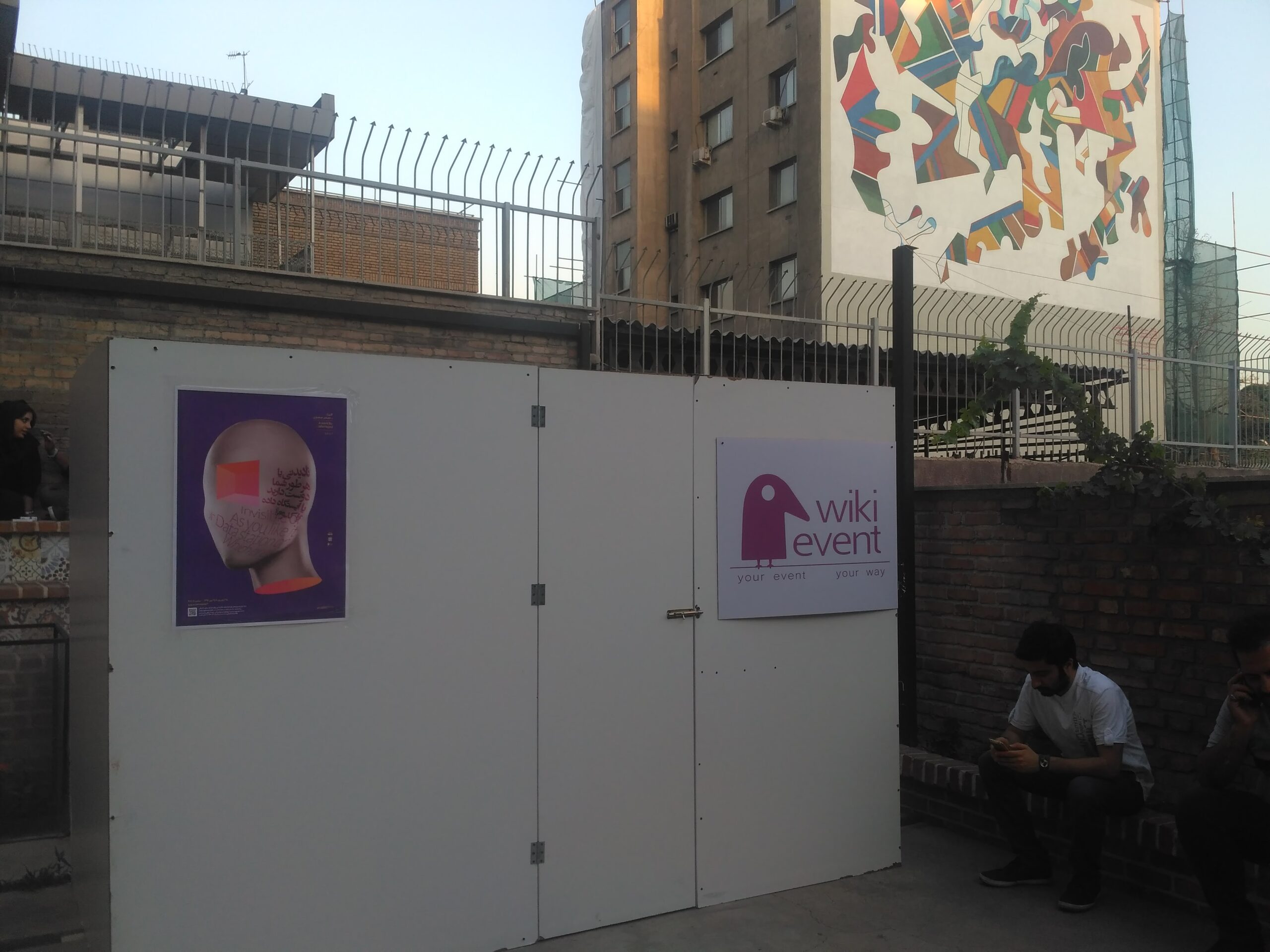
I never found a title for this one!
That’s the actual starting point: Buying a laptop took me two months. Somewhere in a mall shampoo aisle, staring at Moisture Repair versus Argan Oil versus Tea Tree Tingle, I started wondering whether more choice actually makes people freer, or just makes them tired.
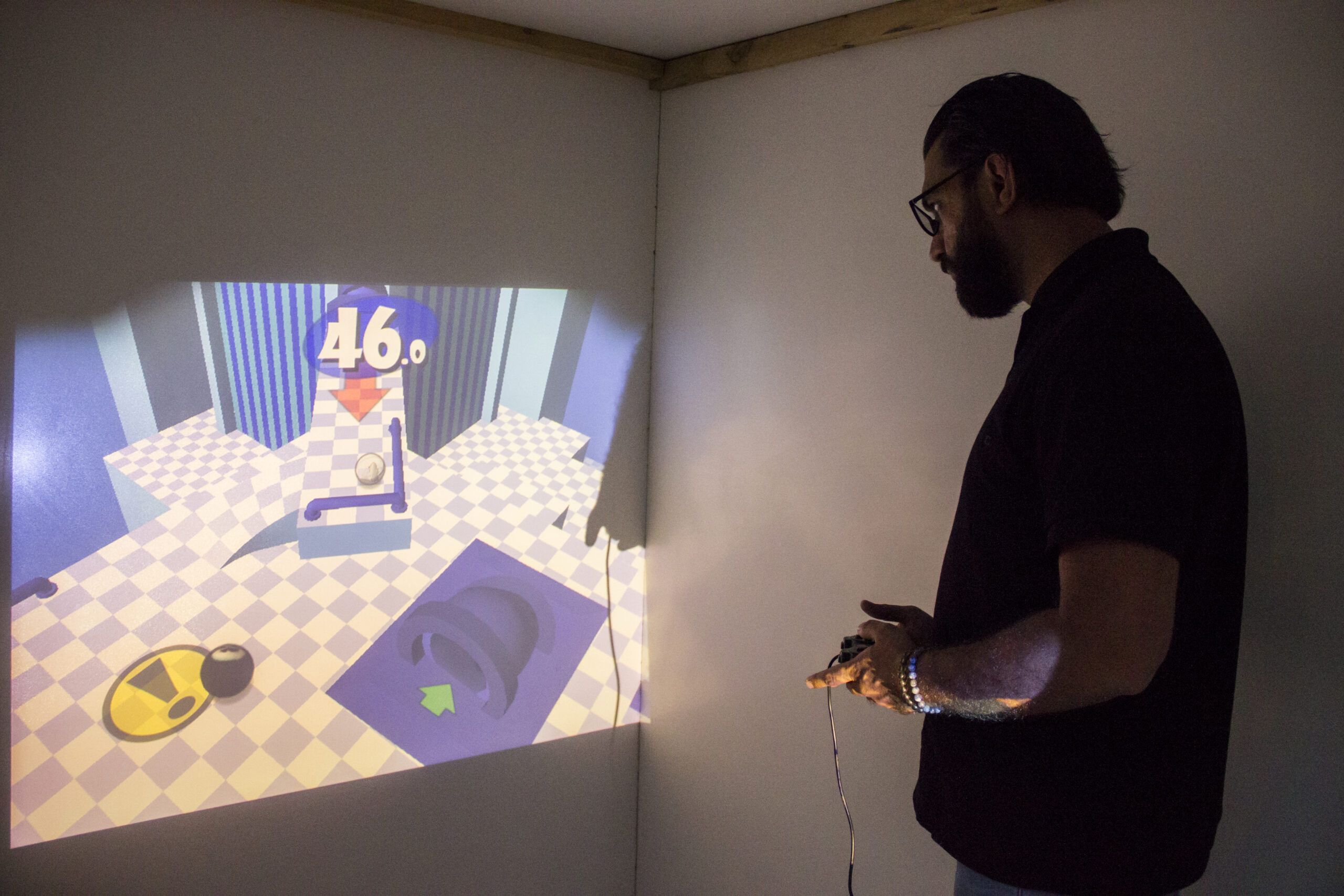
So I built a machine that gives you too many choices on purpose. A bot messages you to book a time, then you step alone into a white cube, phone in hand. Whatever you choose becomes physically real around you. A game gets projected on one wall with a joystick in your hand. A location plays 360° on the floor. A friend appears on the ceiling. You stand at the center of your own decisions.
I still don’t know what to call it.
Hair Cutting Ceremony of Jafar (2016)
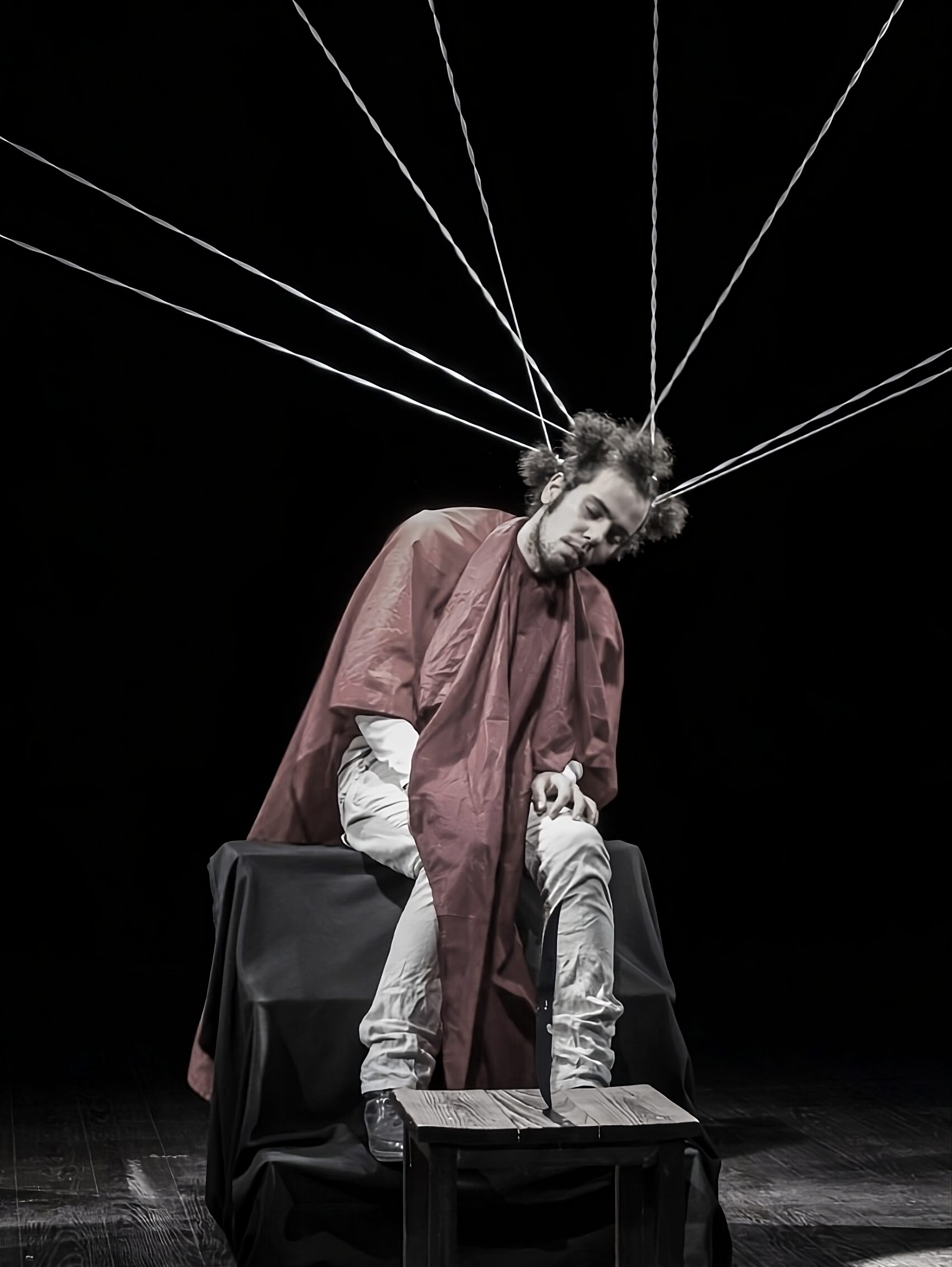
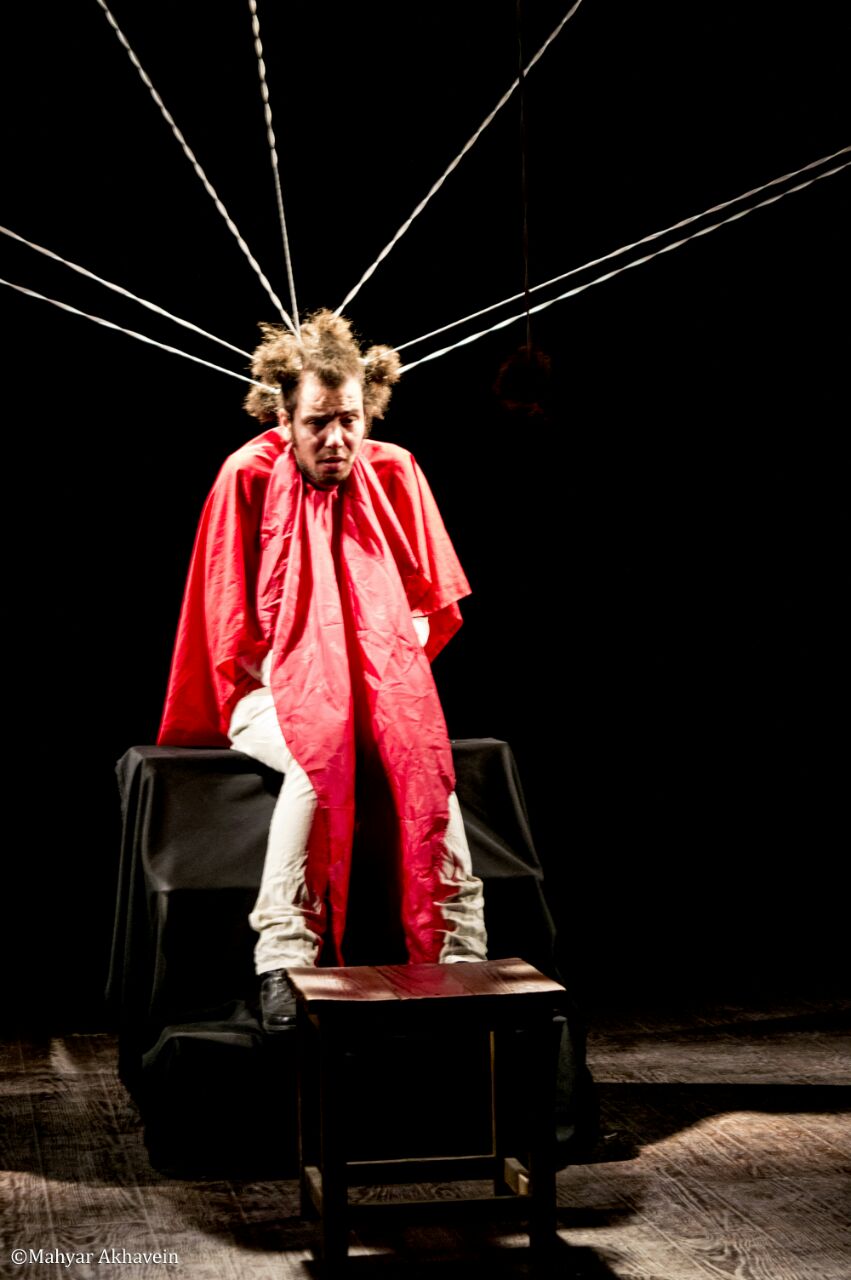
I was bullied for my curly hair for most of my childhood. It became the one part of my body I was ashamed of, the thing that marked me as different before I’d said a word.
For twenty days, I told that story on Telegram, chronologically, from childhood with photos, voice notes, videos, whatever fit that day, letting subscribers watch the shame build the same way it built in me. Then I invited them somewhere physical to gather.
On the night itself, everyone got a piece of paper: This is not me. This body enclosed me. I have to live within its boundaries. Sometimes I felt embarrassed about being in this figure. People always have something to hide. Do you? Then I asked them to cut my hair.
Some came up to the stage and told their own stories out loud, things they’d apparently been carrying the same way I’d been carrying mine. The paper worked on people who couldn’t say it in front of a room; a lot of what they wrote was more honest than I expected.
By the end, the hair was gone, and this was a collective scarification.
2nd Law – Entropy (2014)
I was studying mechanical engineering when I ran into the second law: in any isolated system, disorder only ever increases, never reverses. It stuck with me past the classes, the way it shows up in philosophy too: the sense that decay isn’t a malfunction, it’s the direction everything is already moving in.
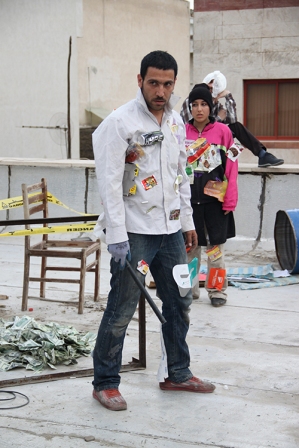
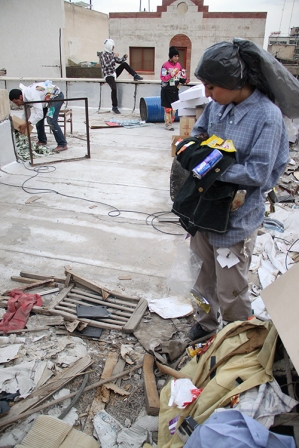
I’d designed it to happen on one of Tehran’s main streets, but couldn’t get the rights, so it moved into a building instead. A figure in a diaper, the thinker, leads visitors through the space, each one staging a different shape of entropy: a couple living under a garbage dump eating fire as their meal, another couple in trash-covered clothes inside an oil barrel, a security guard standing watch over a pile of cash that means nothing without a system left to spend it in.